CASE STUDY 01
Scaling Revenue Operations Through Strategic Talent Placement
Client
Mid-Market Technology Company | Florida-Based | 120 Employees
Situation
The client was experiencing rapid growth but lacked internal revenue operations leadership. Sales and marketing teams were misaligned, reporting lacked visibility, and leadership suspected revenue leakage due to inefficient processes.
They had previously engaged traditional recruiters but received high-volume, low-alignment candidates.
The risk:
• Slowing revenue growth
• Burnout across leadership
• Missed forecasting targets
Vantory Strategy
Vantory reframed the hiring objective from “Hire a RevOps Manager” to:
“Hire a revenue infrastructure architect capable of aligning sales, marketing, and finance.”
We conducted:
• Leadership stakeholder interviews
• KPI mapping across departments
• Growth stage diagnostic
• Compensation benchmarking
• Role repositioning for performance alignment
Execution
• Built a performance-based role scorecard
• Identified passive candidates with SaaS scale-up experience
• Conducted multi-layer vetting (technical, strategic, cultural)
• Presented 3 executive-caliber candidates
Time to shortlist: 17 days
Time to offer: 28 days
Outcome
Within 90 days of hire:
• Sales forecasting accuracy improved by 22%
• Lead-to-close conversion improved by 14%
• Revenue reporting cycle time reduced by 30%
• Leadership clarity increased across departments
Strategic Value to Client
Vantory Advisory did not fill a position.
We strengthened the company’s revenue infrastructure.
Estimated ROI impact (Year 1): High six-figure operational efficiency gain.

CASE STUDY 02
Transforming Reactive Hiring into Strategic Workforce Architecture
Client
Healthcare Services Organization | 85 Employees | Multi-Location
Situation
The company struggled with high turnover and inconsistent performance across locations. Leadership believed they had a “talent problem,” but deeper analysis revealed:
• Poor role clarity
• Misaligned compensation structures
• No leadership pipeline
Hiring had been reactive and urgent-driven.
Vantory Strategy
Vantory implemented a structured talent advisory approach:
-
Workforce gap analysis
-
Role architecture redesign
-
Compensation realignment strategy
-
Performance KPI standardization
Instead of filling three mid-level roles, we advised consolidating into:
• 1 High-Impact Operations Director
• 1 Data-Driven Regional Manager
Execution
• Sourced candidates with multi-unit healthcare scaling experience
• Assessed operational improvement track records
• Evaluated culture and change management ability
• Delivered 2 curated finalists
Time to placement: 32 days
Outcome
Within 6 months:
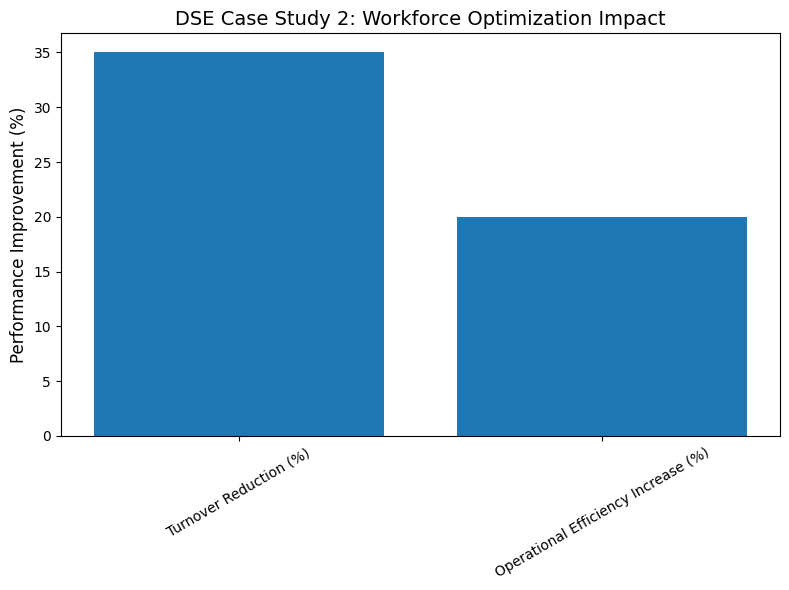
• Turnover reduced by 35%
• Operational efficiency increased
• Leadership oversight improved across all locations
• Performance reporting standardized
Strategic Value to Client
Vantory Advisory helped restructure their workforce for performance leverage — reducing cost while increasing output.
Result: Stronger margins, stronger leadership, scalable infrastructure.
CASE STUDY 03
Elevating a High-Potential Candidate into a Leadership Track Role
Client
Senior Operations Analyst | MBA Graduate | Transitioning Industries
Situation
The candidate was talented but under-positioned:
• Applying broadly without traction
• Underpricing market value
• Lacking executive-level narrative
• Considering additional education unnecessarily
Vantory Strategy
We reframed the candidate from “Operations Analyst” to:
“Data-Driven Process Optimization Leader.”
Our intervention included:
• Strategic resume transformation
• Market value positioning
• Interview performance coaching
• Targeted employer mapping
• Compensation benchmarking
Execution
• Narrowed target to growth-stage tech companies
• Introduced candidate to curated employer network
• Conducted executive simulation interviews
• Negotiation strategy coaching
Outcome
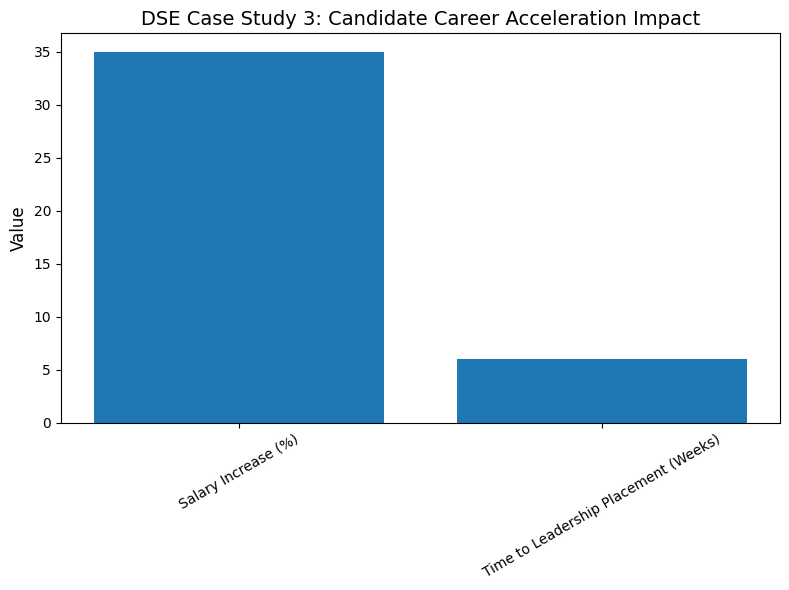
• Secured leadership-track offer within 6 weeks
• 35% salary increase
• Clear advancement pathway
• Strong cultural alignment
Strategic Value
Vantory Advisory didn’t just help secure a job.
We accelerated a leadership trajectory.